NSAI shares learnings on voluntary sustainability reporting with SMEs
NSAI recently participated in Dublin Chamber's RESPONSE Project event, which brought together sustainability professionals, SMEs and industry experts to explore practical tools, frameworks and approaches that can support sustainability and environmental, social and governance (ESG) reporting.
Representing NSAI, our Climate Action & Sustainability Centre of Excellence shared insights from NSAI's voluntary sustainability and ESG reporting journey to date. The discussion highlighted how structured sustainability reporting can help organisations better understand, measure and communicate their environmental, social and governance performance, whilst also identifying opportunities for continual improvement.
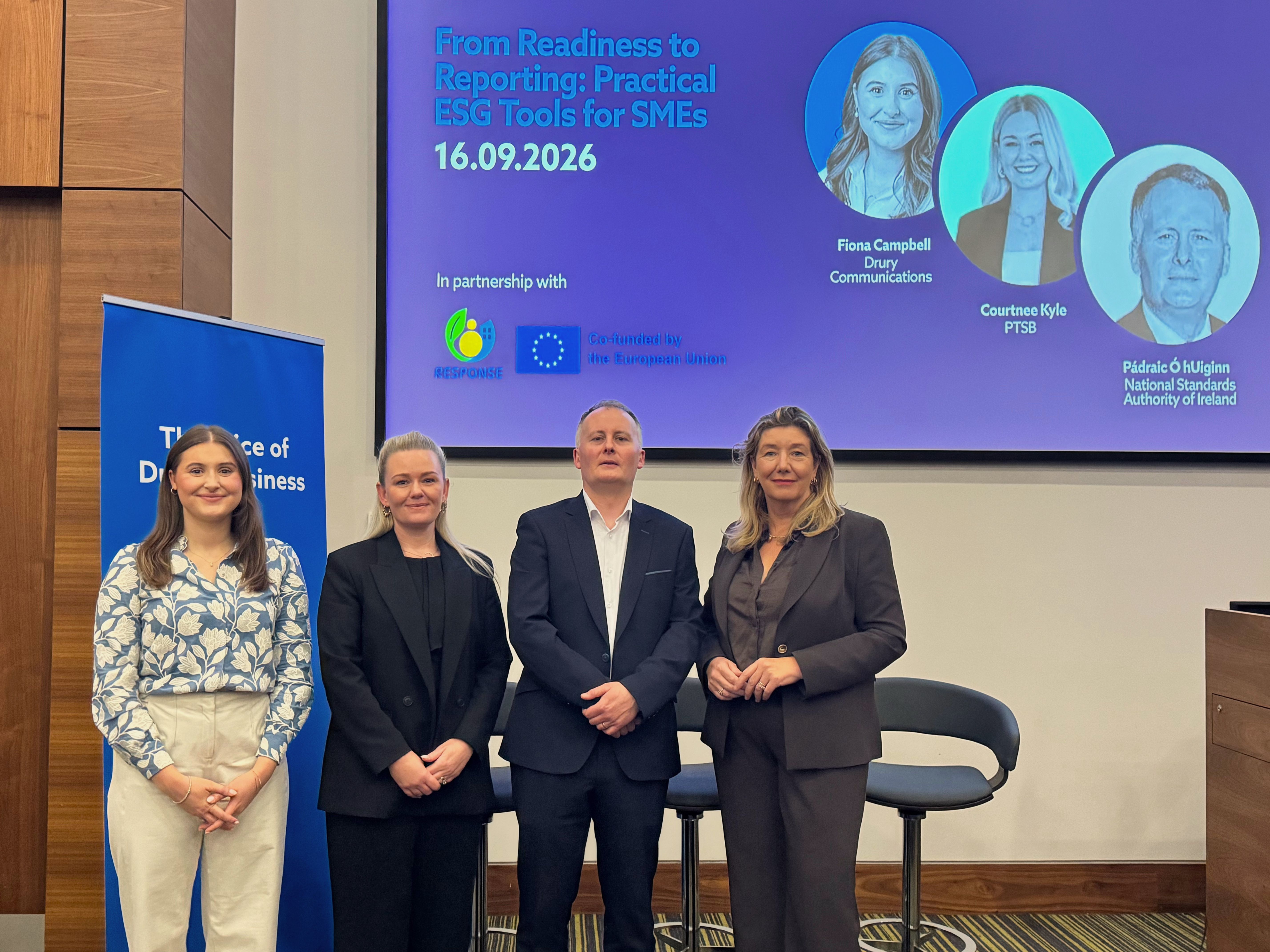
The event covered the contexts of both mandatory and voluntary corporate sustainability reporting, and shared insights from organisations that have followed each pathway. A key focus was how SMEs can navigate the demands from larger businesses for ESG data through the allocation of available resources. NSAI shared its learnings and experiences in using the Voluntary Sustainability Reporting Standard for SMEs (VSME), developed by EFRAG, as a standardised framework for non-listed SMEs to report sustainability information. VSME was designed to help businesses respond to growing ESG information requests, improve access to finance and strengthen engagement with customers and stakeholders. It provides the foundations of the European Commission’s new imminent Voluntary Standard, which will have a legislative basis.
As part of its commitment to supporting knowledge transfer and wider adoption of sustainability reporting, NSAI has made its first voluntary VSME sustainability report publicly available, providing SMEs with a practical example of how the standard can be applied in practice.
To learn more about NSAI's VSME sustainability report and access the publication, visit: Voluntary Sustainability Reporting Standard for SMEs (VSME) | NSAI.
[Disclaimer: All reasonable effort was made to ensure that the information on this page was correct at the time of publication. Any views or opinions expressed on this page are not necessarily those of NSAI. NSAI accepts no responsibility or liability howsoever arising from the contents of this publication or any errors, inaccuracies, or omissions in the contents of the information provided therein.]